What Is Personal Color Analysis? A Guide From Our Myeongdong Studio
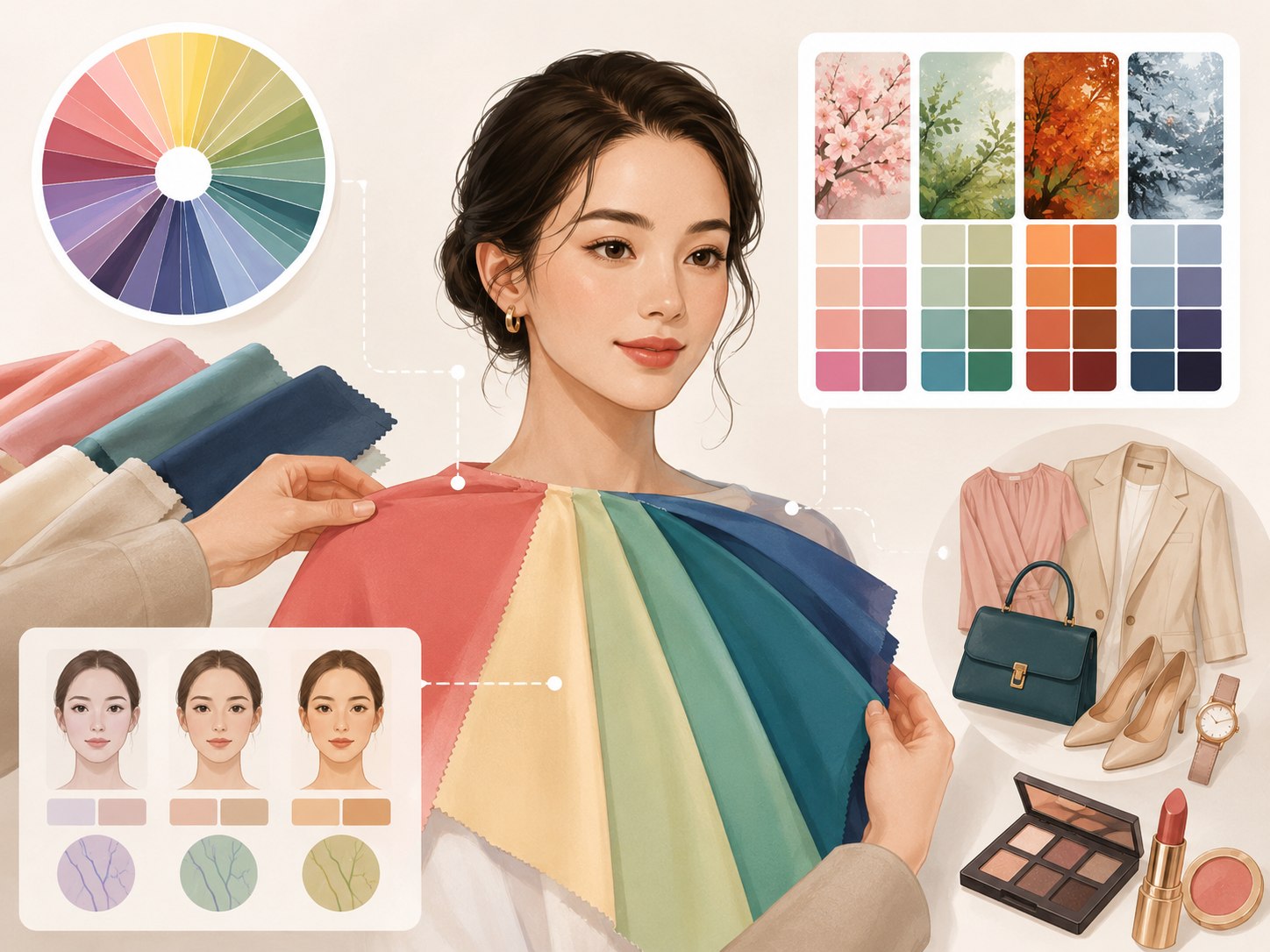
How a Color Analysis Session Works in Korea
A trained consultant holds a series of colored fabrics up to your face, one at a time, under neutral lighting. Some drapes will visibly brighten your skin and sharpen your features; others will wash you out or draw attention to shadows and redness. The pattern across dozens of drapes points to your season.
The Four Seasons, Explained Simply
Every color season is built from two variables: undertone (warm or cool) and depth/contrast (light, soft, deep, or bright). Spring and Autumn are warm; Summer and Winter are cool. From there, sub-typing (12-tone) adds further precision — see our Color Seasons Explained guide for the full breakdown.
Why Personal Color Analysis Started in Korea
Personal color analysis has become especially mainstream in Korea, where it's common for both wardrobe and makeup shopping decisions. Visitors increasingly seek it out specifically while in Seoul — see Why Get Color Analysis in Korea for more on that.
Common Questions
Is personal color analysis the same as a skin undertone test?
Undertone is one part of the picture; a full analysis also considers depth and contrast, which is why in-person draping gives a more complete result than an undertone check alone.
How accurate is it?
In-person draping under neutral light is considered more reliable than online quizzes or photo-based tools, since lighting and camera color can distort digital results.
Do I need to know anything before my session?
No — your consultant will explain your result as you go. See our How to Prepare guide for tips on what to wear.
Where can I get this done in Seoul?
Color Avenue offers English-speaking sessions at our Myeongdong studio — see the Booking page to get started.